
Company
The Travel Rule: what's changing from 1 July 2026
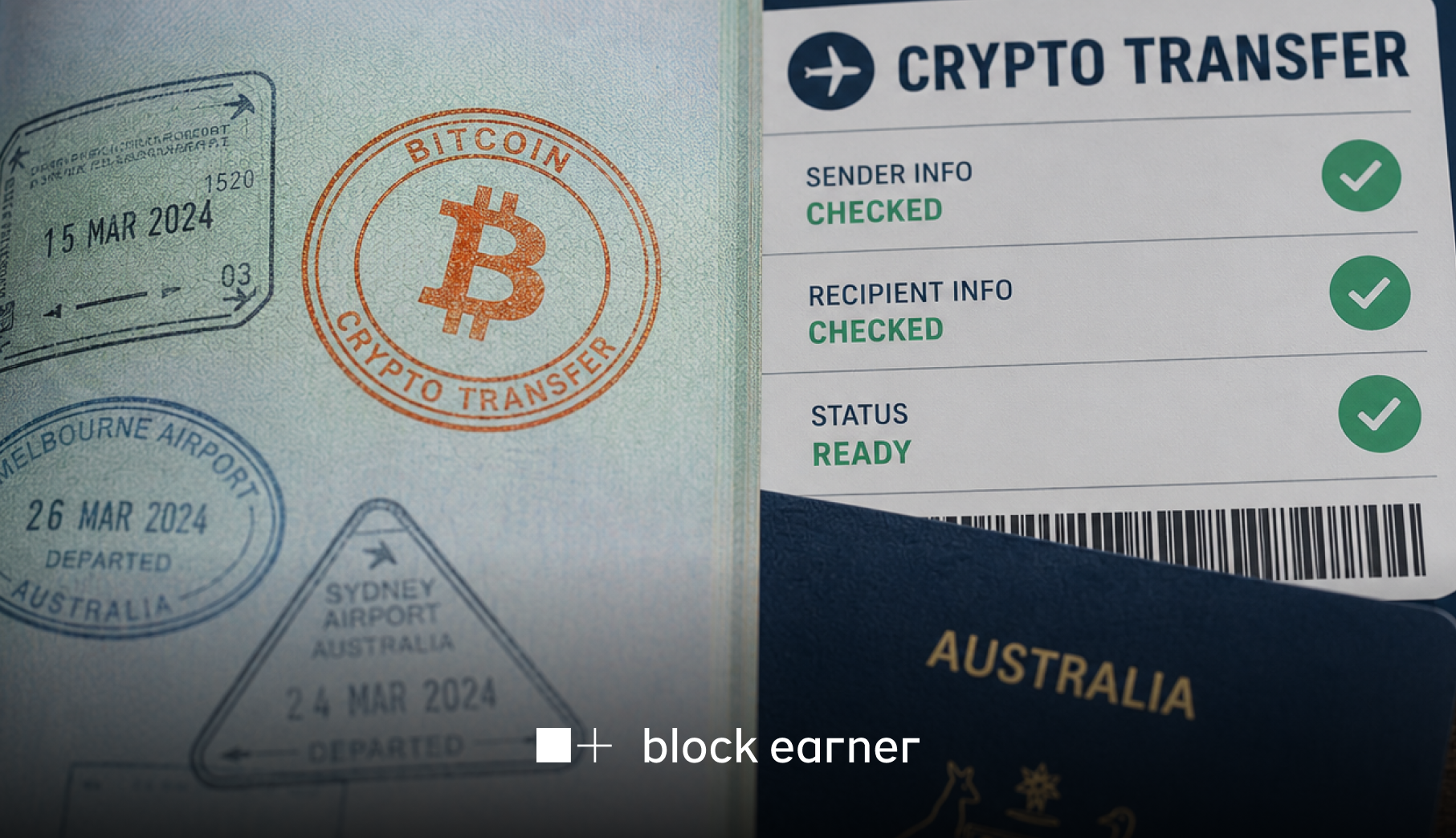


From 1 July 2026, a new set of Australian regulations known as the Travel Rule applies to Block Earner and every other crypto exchange operating in the country. It introduces an additional requirement when you send and receive crypto.
Rather than adding that requirement as a separate step on every transaction, we have built it into a new Address Book. This post explains what the Travel Rule is, what changes for you, and how the Address Book is designed to keep transfers straightforward.

What is the Travel Rule?
The Travel Rule is part of Australia's anti-money laundering and counter-terrorism financing framework, administered by AUSTRAC. It aligns local exchanges with global standards set by the Financial Action Task Force (FATF) - the same standards that have long applied to bank transfers.
In practice, when crypto moves between regulated platforms, each platform is required to collect and, where applicable, share basic information about the sender and the recipient of a transfer. The purpose is to make the movement of funds more traceable and to reduce the risk of fraud, money laundering, and other financial crime.
It is worth being clear on the scope: the Travel Rule applies to exchanges, not to individuals holding their own crypto. Owning assets in a private, self-custody wallet (like a Ledger, Trezor, or MetaMask), and moving crypto between your self-custody wallets, remains outside its scope.
What changes for you
There are two points where you will notice the difference.
Sending crypto. Before you can withdraw to a destination, you will add it to your Address Book. When you save an address, you provide the details the Travel Rule requires: whether the wallet is your own or belongs to a third party, whether the recipient is an individual or a business, and - for a destination held at another exchange - which exchange and the recipient's name. Once saved, the destination is ready to use, and the required information accompanies every withdrawal you send to it.
Receiving crypto. When you receive crypto from another exchange, the sending platform will collect the required details from the sender so the information can 'travel' to Block Earner with your deposit. Deposits that arrive with this information are processed as normal. Deposits without it - including transfers from self-custodial wallets - may require us to contact you for additional details before the funds can be credited.
In some cases, transfers may take longer while these details are confirmed, and a transfer may not proceed if the required information cannot be validated. Providing accurate details when you save an address is the most reliable way to avoid delays.
The Address Book
A regulatory requirement should not mean re-entering recipient details on every transfer. Instead of attaching a form to each transaction, we have made the Address Book the place where Travel Rule information is captured and stored.
How does it work:
- Details are captured once. When you save a destination, you provide the required information at that point. Every subsequent transfer to that address already carries what the Travel Rule needs.
- Destinations are saved for reuse. Wallets and exchange accounts you transfer to regularly are stored securely and selected from your Address Book, rather than re-entered each time.
- The risk of errors is reduced. Saving and reusing a verified address lowers the chance of a mistyped address - or an address-poisoning attack - directing funds to the wrong place, which remains one of the most consequential errors in crypto.
While the Travel Rule introduces an additional input, the Address Book is designed to remove more friction than the regulation adds - particularly for users who transfer to the same destinations repeatedly.
What you need to do
Ahead of 1 July, we recommend:
- Have the relevant recipient details available: full name, whether the recipient is an individual or a business, and, for an exchange destination, the exchange name.
- Be prepared to confirm a few details about the sender for incoming transfers that originate from a third party, so deposits can be credited without delay.
How your information is handled
Collecting additional details naturally raises questions about how that information is stored and protected. Data security is core to how we operate: Block Earner is ISO/IEC 27001 certified, and we collect and share only the information these regulations require. Further detail is available in our Privacy Policy.
Timeline
- Now until 1 July 2026: Crypto deposit and withdrawal process remain unchanged.
- From 1 July 2026: The Travel Rule applies in full across Block Earner and every other Australian exchange, with the Address Book in place to support it.
Regulatory expectations for crypto continue to move toward the standards that already apply across financial services. Our priority is to meet those obligations while keeping the experience efficient and clear. The Address Book reflects that approach.
Till the next release,
Block Earner Product Team
Disclaimer: The information contained in this blog is general in nature and is provided for informational purposes only. It does not constitute financial, legal, or tax advice, and should not be relied upon as such. Block Earner does not guarantee the accuracy or completeness of any information presented. You should consider your own personal circumstances and seek professional advice before making any financial or investment decisions. Past performance is not indicative of future results. All investments carry risk.