
Market Update
America now owes $40 trillion. What it means for Bitcoin



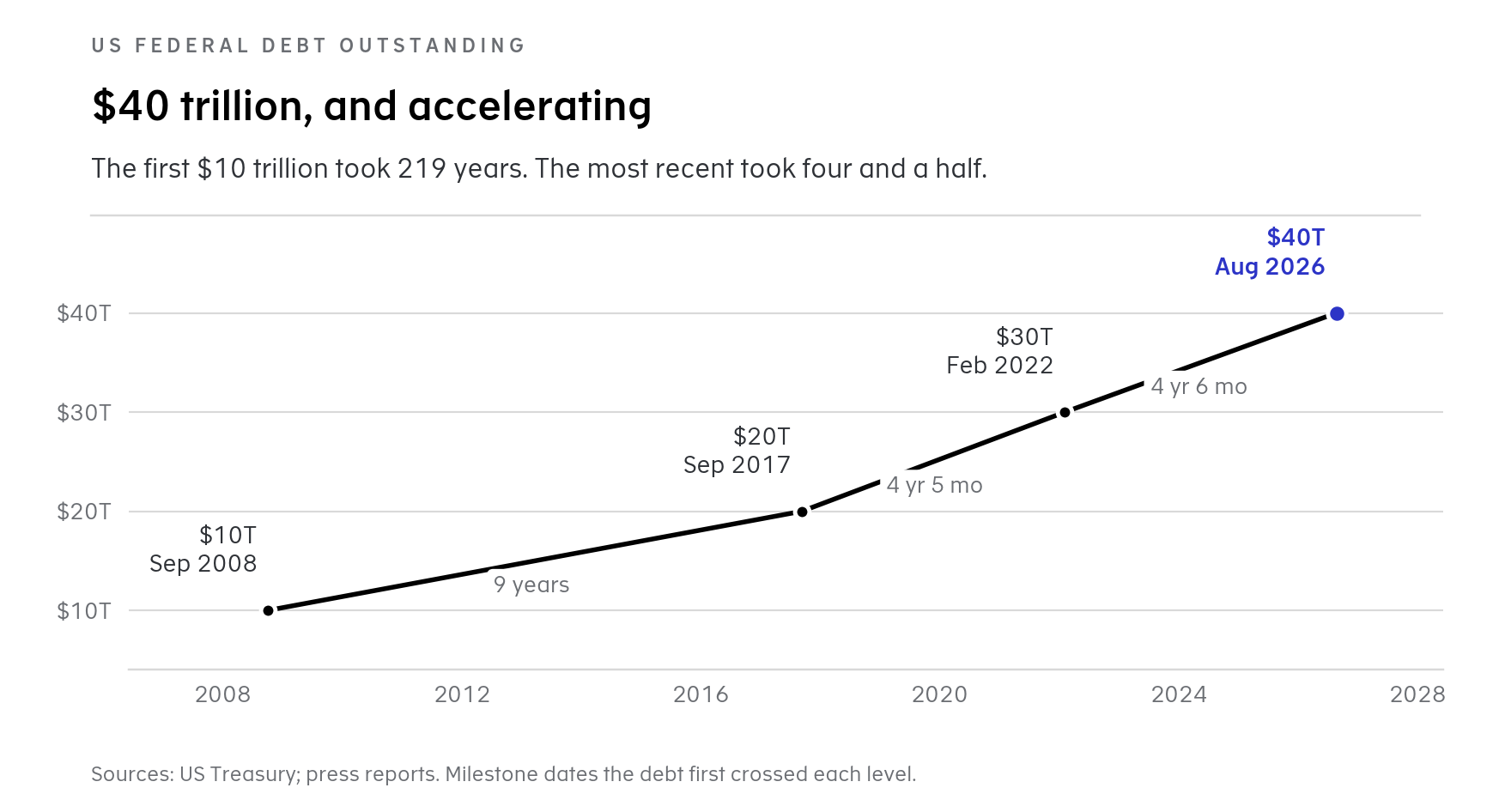
$40,000,000,000,000. That's the U.S. national debt. It arrived months ahead of forecasts, and it has doubled since September 2017. Meanwhile, Bitcoin’s market cap is up +$295 billion in the last 7 days.
What the Treasury is doing about it
The U.S. Treasury must keep paying interest on the debt.
Some of that money was borrowed for 30 years, so the government would not need to repay it for a long time. But investors now demand high interest rates to lend money for that long.
So the Treasury is buying back more of its 30-year debt. From 9 September, it will buy back $4 billion at a time instead of $2 billion, seven times over, through to 4 November.
Here is how it works:
-
The Treasury sells new 3-month debt to investors and receives cash.
-
It uses that cash to buy back existing 30-year bonds.
-
Those 30-year bonds are cancelled, meaning the Treasury no longer owes money on them.
The total amount owed stays roughly the same.
The catch is that the short-term debt must be repaid or replaced much sooner.
Is it QE? (quantitative easing/money printing)
Not technically. QE is when a central bank creates new money and uses it to buy financial assets, usually government bonds.
Here, the Treasury is not creating new money. It is issuing and selling short-term IOUs, then using the cash from investors to buy back more expensive long-term debt.
But the effect can be similar: fewer long-term bonds in the market can push long-term interest rates lower, making borrowing cheaper and helping assets like stocks and crypto.
So it is not money printing, but it can loosen financial conditions in a similar way.
What this means for Bitcoin
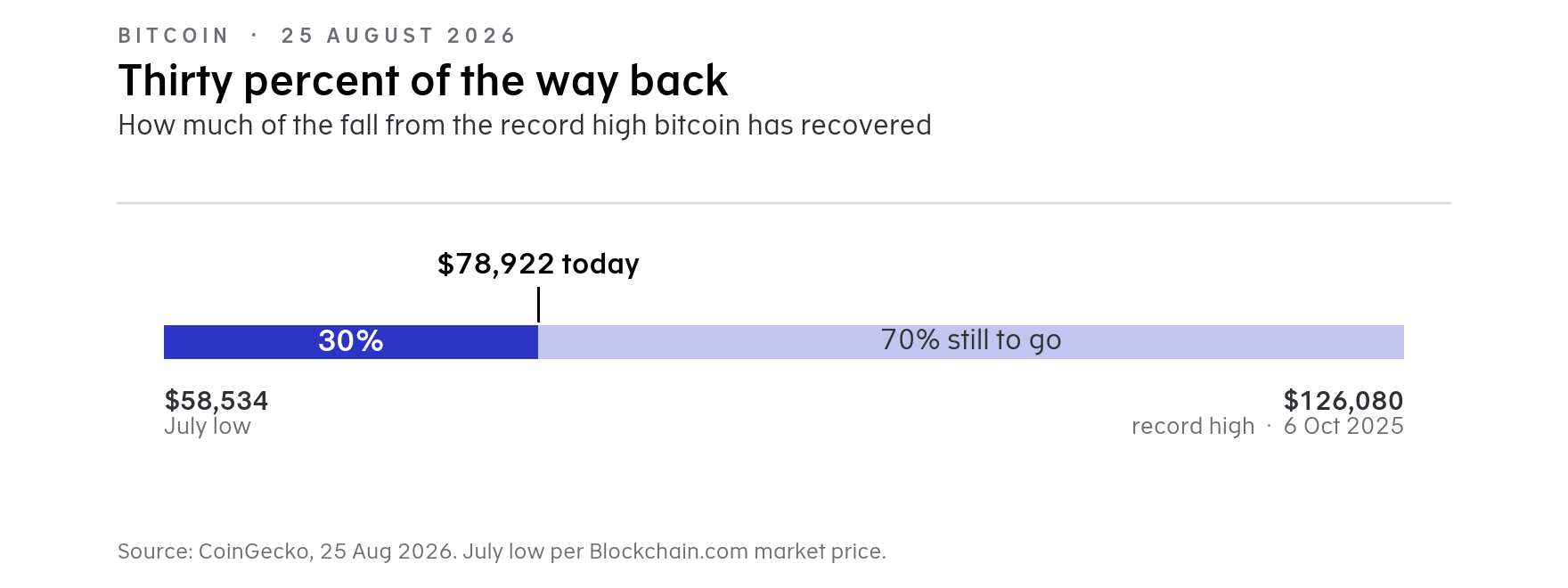
Bitcoin has clawed back 30% of the ground it lost from October's record high. It needs the other 70% to make a new one.
Some of that is the rate story above: cheaper long-term money lifts risk assets across the board. But strip out the jargon and the U.S. Treasury just refinanced, swapping expensive long-term debt for cheaper short-term debt to lower its interest bill for now. Any borrower knows the move. The difference is America can print what it owes.
Nobody can issue more Bitcoin. That's the argument for holding it, and $40 trillion is the clearest illustration of that argument anyone has produced.
Bitcoin is still 37.4% below its October record all-time high, and 59% through the current halving cycle. The next halving lands around April 2028.
We broke the cycle down last week, how this bear market compares to the last three, and what the CLARITY Act could change. Read the blog here →

Disclaimer: The information contained in this blog is general in nature and is provided for informational purposes only. It does not constitute financial, legal, or tax advice, and should not be relied upon as such. Block Earner does not guarantee the accuracy or completeness of any information presented. You should consider your own personal circumstances and seek professional advice before making any financial or investment decisions. Past performance is not indicative of future results. All investments carry risk.